
salmon university saltwater fishing education, john keizer, tom nelson, washington, british columbia, puget sound, pacific northwest salmon and halibut fishing
Silver Horde Tackle
Silver Horde Tackle
Tel: 425-778-2640
Great Lakes Homes Page

Winter Brown Trout Bonanza
By: Chris Busalacchi

As autumn wanes and the winter snow starts to fly, most people have there boats tucked away for the long winter ahead. There are a few hearty souls that brave the elements and push themselves to the limits. Why? Winter brown trout. Brown trout are notorious for concentrating in large numbers near shore during the winter months throughout the Great Lakes. This presents great opportunities for both shore and boat anglers alike, but is ideal for those with small boats who don't have a chance to chase them in open water through the summer months.

Winter browns are often quite simple to pursue as they are found in very distinct areas and can be caught on conventional tackle that you would use for walleye or bass. This enables everyone a chance without having to go out and invest in expensive and highly specialized equipment.

The first step is to figure out where to find winter browns. Here in Milwaukee, we are blessed with multiple warm water discharges, a deep harbor and a large shad population which concentrate our brown trout throughout the winter. The other key component is that these discharges are at the confluence of three tributaries that empty into Lake Michigan. This creates the receipt for great brown trout fishing in the cold weather months. Key elements to focus on in locating winter brown locations are warm water which in turn attracts predators and prey. This can be a warm water discharge from a power plant, water filtration plant or river mouth. If you are fishing a river mouth, don't forget to search near shore structures adjacent to the river mouth as browns can be very structure oriented. Also, pay attention to where brown trout are stocked in your port. These fall spawning fish are hungry after their fall migration and are actively feeding as they return to the lake. You will typically find that browns will concentrate in these key areas once the water temperatures drop below 40 degrees.

Once you determine what type of structure is holding the brown trout, now it's a matter of presentation. Discharge fishing has the broadest range of presentations that apply. Bait such as spawn, wax worms, emerald shiners and golden shiners all have there time and place. Present these either on the bottom with a slip sinker or under a slip float depending on water conditions and depth. There are other days where you can get away with artificials. In these situations, vertical jigging is one of the best methods. Try jigging spoons, blade baits and minnow plastics on darter head jigs. Some popular bait's include Swedish Pimples, Northland Forage Minnows, Zips, Cicada by Reef Runner and Berkley Gulp Minnows in the 3" and 4" sizes. Casting crankbaits and spoons can also apply depending on the type and location of the discharge.

The other method to target with brown trout is trolling. Trolling allows you to cover water and present many baits within the strike zone. Keeping the baits in the strike zone is a very important element in the winter months as browns are often oriented in the bottom half of the water column seeking out slightly warmer water. Depending upon water depth, flat lines, lead core, clip on weight such as a Dive Bomb, and divers like a Slide Diver Lite Bite are used. Crankbaits rule the winter bite. Popular models include Smithwick Rattlin Rogues, Storm Thundersticks, Bomber Long A's, Rapala Husky Jerks and Shad Raps. When selecting crankbaits start with a number of different styles and let the fish tell you what they want. Some day's tight wobbling bait with small rattles like a Smithwick Rattlin Rogue will out produce a bait like a Bomber Long A that has a wide wobble with only a few big, loud rattles. Spoons will also produce in the winter, but with less consistency as crankbaits. I prefer to fish smaller spoons like Michigan Stingers in the standard and scorpion sizes. Top producing colors are in blues, oranges, blacks and browns. Some popular patterns include the blue edge, orange edge, craig's x-mas (and reverse), black widow, burnt monkey, and black hornet. In clear water, stealth presentations such as flat lines, lead cores and in-line weights are key. When the water gets churned up with high winds and run off, downrigger and Slide Divers out-produce other presentation by running the baits tight to the ball or diver.

If you decide to venture out this winter to take advantage of some great open water opportunities, remember to take your time and put safety first. Take extra precautious to ensure your safety. Also, remember to bring a shovel and some salt or sand as often times the ramps are in poor condition. So the next time you get cabin fever, consider hitching up the boat versus grabbing the auger and ice shanty and take advantage of this world class fishing.

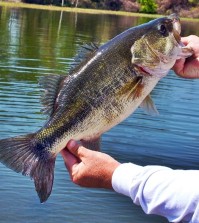
( A great winter brown caught by author Chris Busalacchi while casting last December.)